
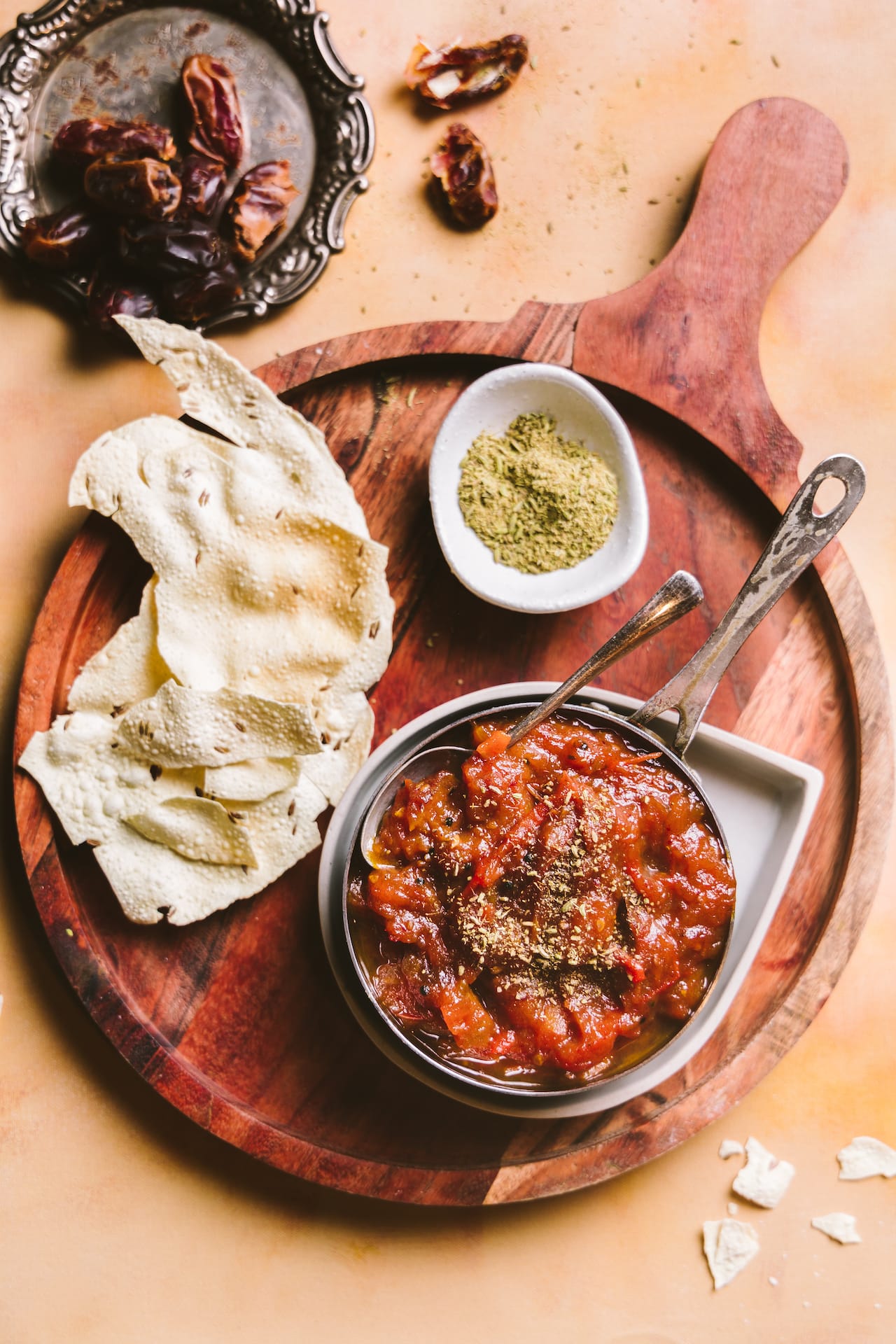
Tomato Khejur Chutney is a traditional Bengali sweet and tangy tomato date chutney made with ripe tomatoes, soft dates, mustard oil, and a handful of aromatic spices. Known as Tomato Khejur Chaatni in Bengali, this simple chutney is a much-loved part of Bengali feasts, wedding menus, and Durga Puja bhog.
What makes this Bengali Tomato Khejur Chutney ?
It is the beautiful balance of flavors. The tomatoes bring a natural tanginess, the dates add a rich, fruity sweetness, and freshly roasted fennel seeds lend a delicate aroma. A little mustard oil, black mustard seeds, bay leaves, and dried red chili bring everything together.
This easy Tomato Khejur Chutney recipe comes together in about 35 minutes and requires no onion or garlic. Traditionally served at the end of a Bengali meal, it is especially delicious with khichuri, rice, papad, and spicy curries.
Why You Will Love This Bengali Tomato Chutney?
- Sweet, tangy, and aromatic: Ripe tomatoes, soft dates, and roasted fennel create a lovely balance of flavors.
- Easy to prepare: The recipe uses everyday ingredients and takes approximately 35 minutes from start to finish.
- A traditional Bengali favorite: Serve it with a festive Bengali meal, Durga Puja bhog, or a special family lunch.
- Naturally free from onion and garlic: The recipe gets its flavor from mustard oil, whole spices, and fennel.
- Easy to customize: Adjust the sugar to your liking and make the chutney sweeter or tangier depending on the tomatoes.
- Versatile enough for entertaining: Along with traditional Indian meals, this tomato and date chutney can be served with crispy snacks or as part of a cheese board.

Ingredients for Tomato Khejur Chutney
Dates add natural sweetness, a rich fruity flavor, and little chewy pieces throughout the chutney. I use soft Medjool dates, which become tender as they simmer with the tomatoes.
Remove the pits before slicing the dates. IYou only need a handful of ingredients to make this authentic-style Bengali tomato date chutney. Each ingredient plays an important role in building its flavor.
1. Fresh ripe tomatoes
Fresh, juicy red tomatoes are the base of this recipe. As they cook, they soften and release their juices, creating the tangy foundation of the chutney.
Choose ripe tomatoes that are flavorful but not spoiled or overly soft. I prefer fresh tomatoes rather than canned tomatoes because they give the chutney a fresher flavor and a more pleasant texture.
2. Dates or khejur
f you are using firmer dates, chop them into smaller pieces so they soften more easily during cooking.
3. Sugar
Although dates provide sweetness, the tomatoes contribute acidity. A little sugar helps balance the tanginess and gives the chutney its characteristic sweet-and-sour flavor.
I prefer my Tomato Khejur Chutney on the less-sweet side. Start with the amount in the recipe, then taste and adjust toward the end of cooking.
4. Mustard oil
Mustard oil is commonly used in Bengali cooking and adds a distinctive pungent flavor to the tempering. It pairs beautifully with the sweetness of the tomatoes and dates.
If mustard oil is unavailable, you can substitute a neutral cooking oil. The chutney will still taste delicious, although the flavor will be a little different.
5. Black mustard seeds
A small amount of black mustard seeds is enough to flavor the hot oil. As the seeds sizzle, they release their earthy, slightly sharp aroma.
Be careful not to burn them, as burnt mustard seeds can make the chutney taste bitter.
6. Bay leaves and dried red chili
Bay leaves contribute a subtle, warm aroma, while a dried red chili adds a gentle background heat.
You can reduce the chili or leave it out if you prefer a milder chutney. The goal is to complement the sweetness, not make the chutney overly spicy.
7. Fennel seeds
Freshly roasted fennel seeds are the ingredient that makes my version of this Bengali chutney particularly special.
I dry-roast the fennel seeds until fragrant, then crush them into a coarse powder. Added toward the end of cooking, the fennel lends a sweet, slightly licorice-like aroma that works beautifully with the tomatoes and dates.
For the best flavor, roast the fennel just before making the chutney rather than using fennel powder that has been sitting in the pantry for a long time.
How to Make Tomato Khejur Chutney
This Bengali Tomato Khejur Chutney is a straightforward one-pan recipe. The most important steps are to temper the spices gently, allow the tomatoes to soften, and simmer the mixture until the dates become tender.
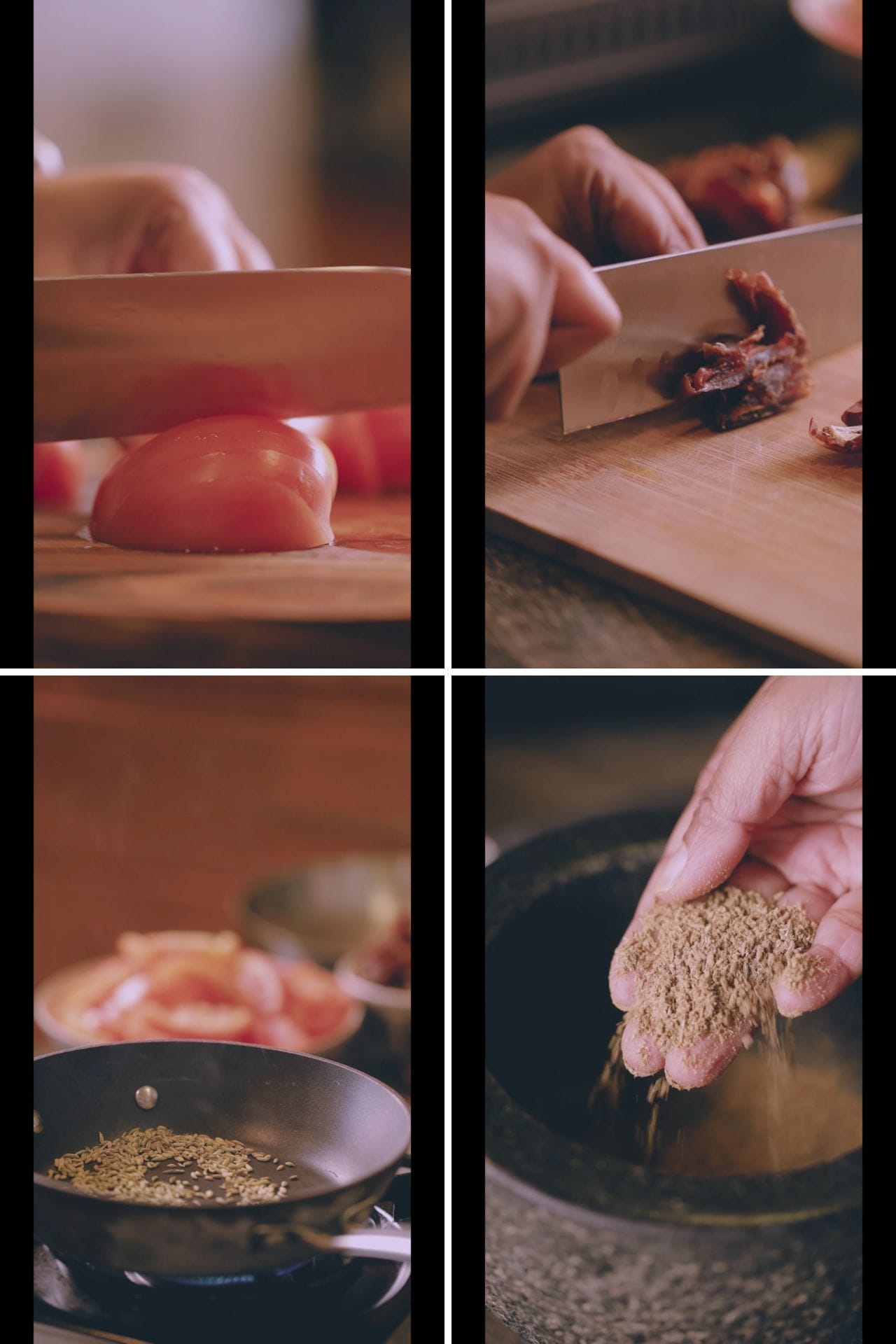
Step 1: Prepare the ingredients
Wash and slice the tomatoes. Remove the pits from the dates and slice them into smaller pieces.
Dry-roast the fennel seeds in a small pan over low to medium heat, stirring frequently until fragrant. Let them cool slightly, then crush them using a mortar and pestle or spice grinder.
Keep the prepared ingredients ready before you begin cooking.
Step 2: Temper the whole spices
Heat the mustard oil in a heavy-bottomed skillet over medium heat.
Add the black mustard seeds, bay leaves, and dried red chili. Let the mustard seeds sizzle briefly to release their aroma.
Do not allow the spices to burn. Once they become fragrant, move on to the next step.
Step 3: Cook the tomatoes
Add the sliced tomatoes to the pan, followed by the salt and sugar. Stir well to coat the tomatoes with the seasoned oil.
Cook until the tomatoes begin to soften and release their juices. Stir occasionally so that the mixture cooks evenly.
As the tomatoes break down, they will create a flavorful base for the chutney. You do not need to add water at this stage if the tomatoes are juicy and the mixture is not sticking to the pan.
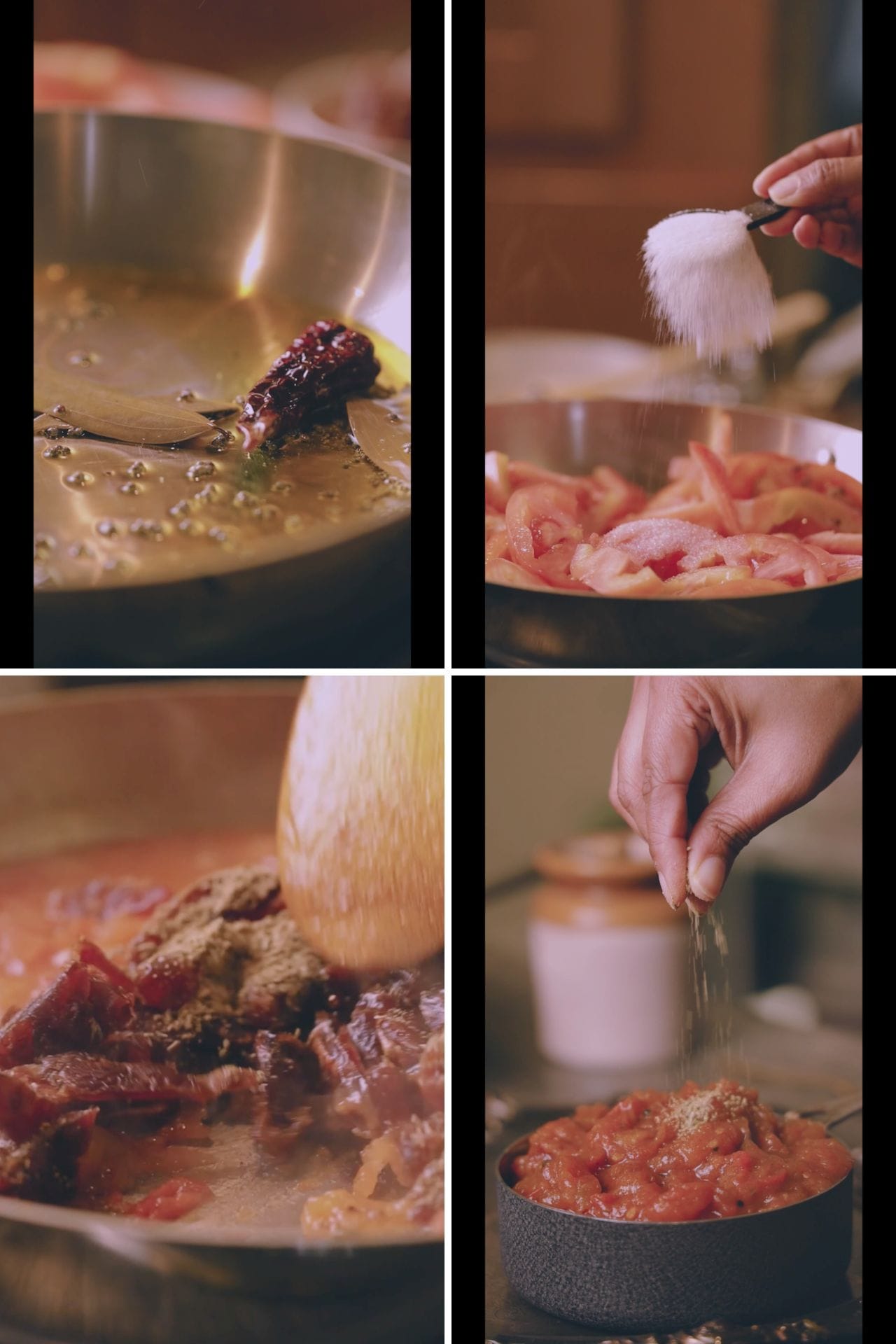
Step 4: Add the dates
Stir in the sliced dates and allow the mixture to simmer.
The dates will gradually soften and absorb the sweet, tangy tomato juices. As the chutney cooks, its color will deepen and the flavors will begin to meld together.
Continue cooking until the dates are tender and the tomatoes have broken down to your preferred consistency.
Step 5: Finish with roasted fennel powder
Add the freshly roasted fennel powder and stir it through the chutney.
Taste and adjust the sweetness if needed. If the tomatoes are particularly tart, you may want to add a little more sugar.
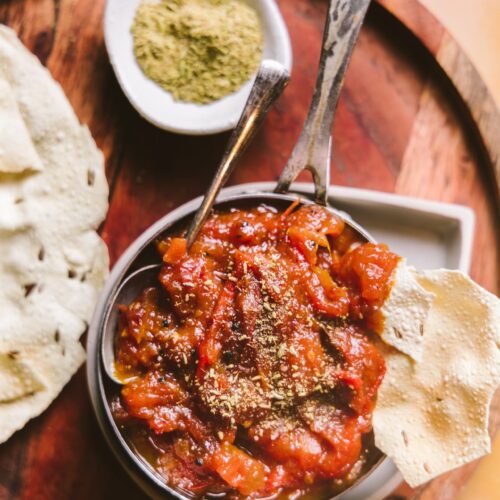
Let the chutney simmer briefly so the fennel aroma blends with the other ingredients. The finished chutney should look glossy, with soft tomato pieces and tender dates throughout.
Step 6: Cool and serve
Remove the pan from the heat and let the chutney cool slightly.
You can serve Tomato Khejur Chutney warm or at room temperature. I especially enjoy it at room temperature, alongside a traditional Bengali meal with rice, dal, vegetables, and a flavorful curry.
Remember that the chutney will become a little thicker as it cools, so avoid reducing it too much while it is still hot.
My Tips for the Best Tomato Khejur Chutney
Use fresh, ripe tomatoes. Flavorful tomatoes provide the best balance of acidity and sweetness. Avoid unripe tomatoes if you want a naturally mellow chutney.
Choose soft dates. Medjool dates work especially well because they soften easily and add a rich, fruity flavor. If your dates are very firm, slice them smaller.
Roast the fennel just before cooking. Freshly roasted fennel seeds have a much more fragrant flavor than stale ground fennel.
Adjust the sweetness gradually. Tomatoes vary in acidity, and dates vary in sweetness. Taste the chutney before adding extra sugar rather than automatically increasing the quantity.
Cook over moderate heat. A gentle simmer allows the dates to soften and the flavors to develop without scorching the sugar.
Do not over-reduce the chutney. The mixture will thicken as it cools. Stop cooking when it is slightly looser than your desired final consistency.
Use a heavy-bottomed pan. This helps distribute the heat evenly and reduces the risk of the sweet mixture sticking to the bottom.

How to What to Serve with Bengali Tomato Khejur Chutney the chutney?
In a traditional Bengali meal, chutney is often served after the main savory courses and before dessert. Its sweet, tangy flavor offers a refreshing contrast to rich curries, fried vegetables, and comforting rice dishes.
Here are some of my favorite ways to serve it.
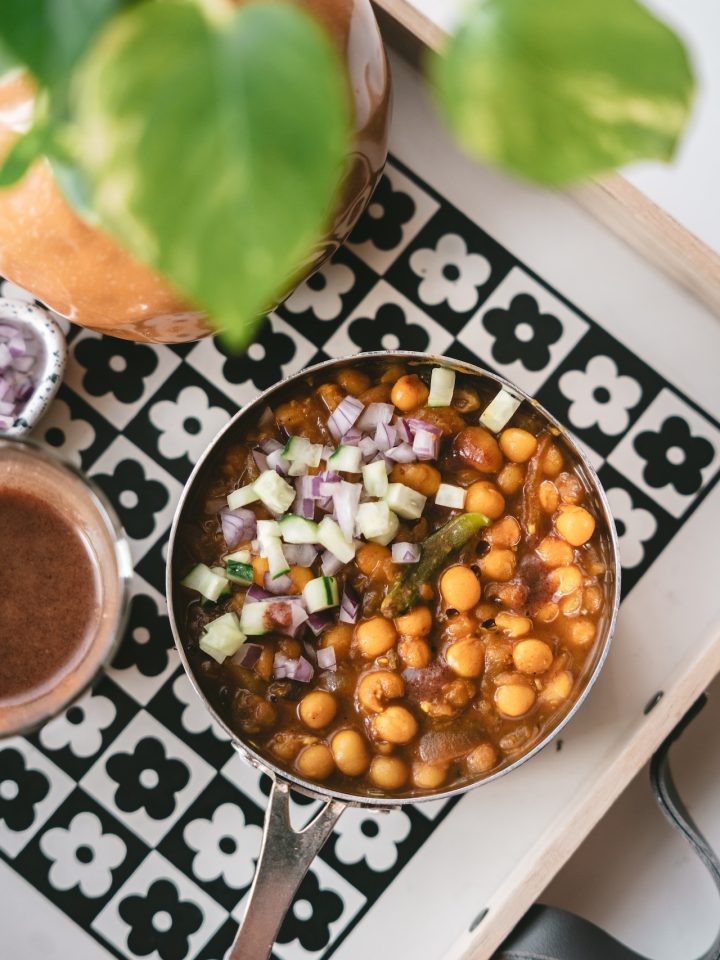
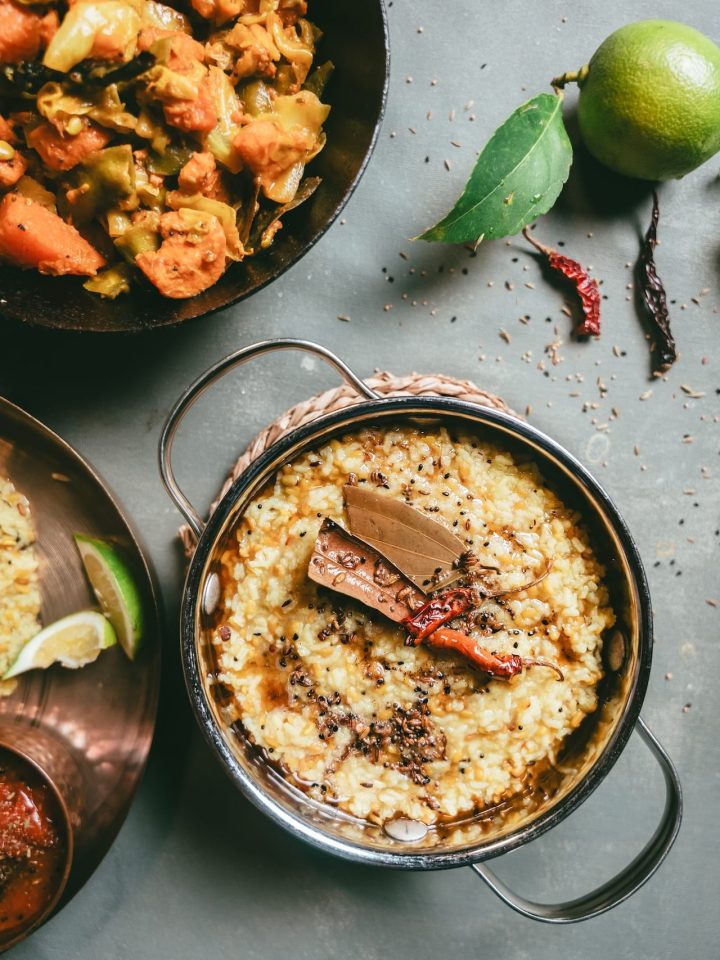
With khichuri during Durga Puja
A bowl of warm Bengali khichuri with fried vegetables, a little bhaja, and sweet tomato date chutney is one of those combinations that immediately brings back memories of Durga Puja.
The gentle sweetness of the chutney contrasts beautifully with the savory, comforting flavors of khichuri.
Try pairing it with Bengali Khichuri for a festive meal.
After a traditional Bengali rice meal
Serve a small spoonful of chutney after rice, dal, vegetables, and curry. The sweet-and-sour flavor creates a lovely transition from the savory part of the meal to dessert.
It is especially good after a rich, spicy preparation.
With Kosha Mangsho
The deep, spicy gravy of Bengali Kosha Mangsho pairs wonderfully with the sweet, tangy notes of tomato and dates.
If you are planning a Bengali Sunday lunch or a festive menu, serve the chutney as one of the final courses.
Explore Bengali Kosha Mangsho for another classic Bengali recipe.
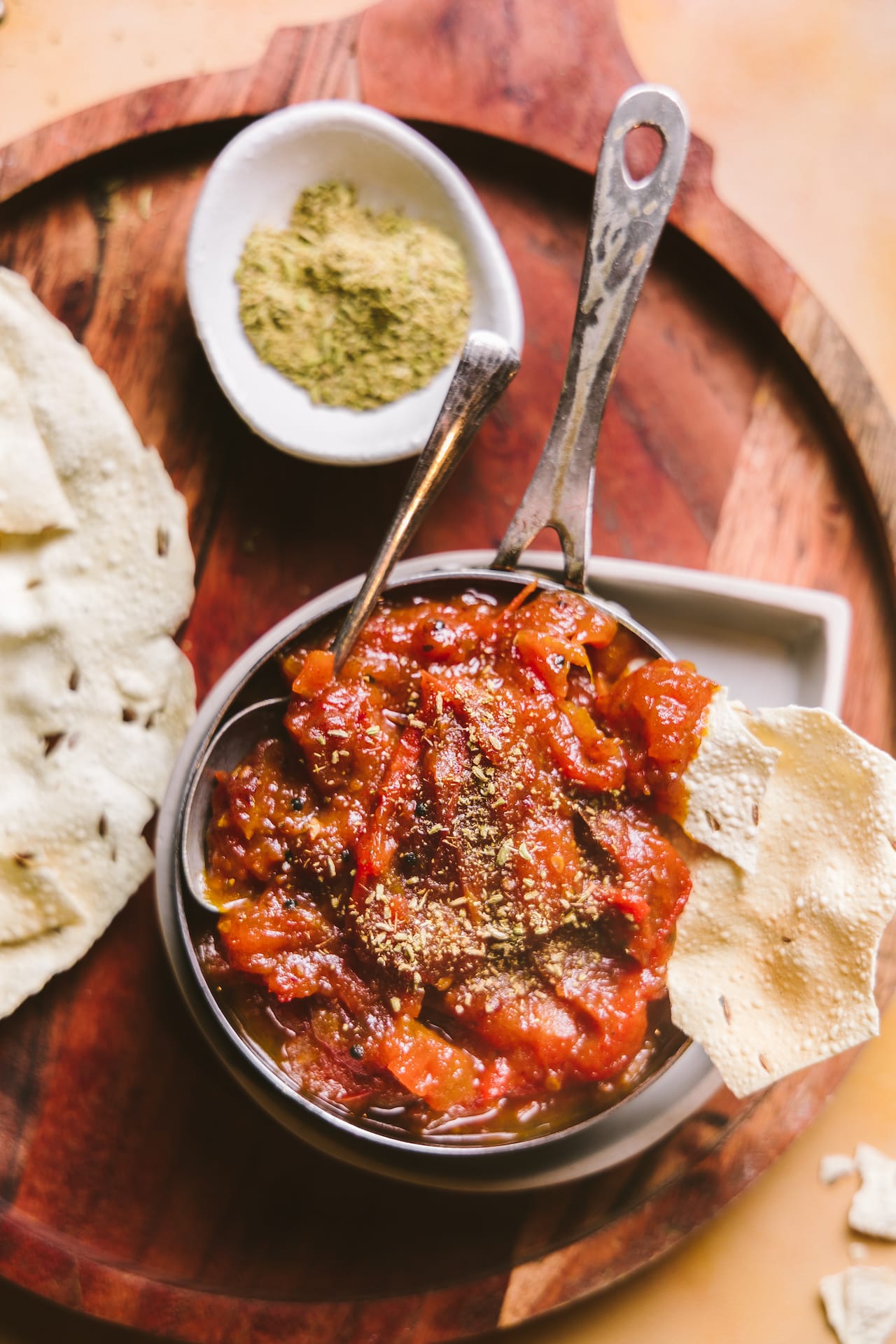
With crispy papad
This is one of the simplest ways to enjoy Bengali tomato chutney. The sweet, soft chutney contrasts with the crisp texture of roasted or fried papad.
Serve it in a small bowl alongside a Bengali meal or enjoy the combination as a light snack.
With luchi, paratha, and savory snacks
Although traditionally served toward the end of a meal, this chutney can also be enjoyed with luchi, paratha, vegetable chops, or other savory snacks.
Its sweet and tangy flavor makes it a versatile accompaniment when you want something a little different from a spicy green chutney.
On a cheese board
For a modern serving idea, add a small bowl of Tomato Khejur Chutney to a cheese board.
The sweetness of the dates and tomatoes works particularly well with sharp cheeses and crackers. It is a lovely way to introduce a Bengali condiment to guests who may not be familiar with traditional Bengali cuisine.
Variations You Can Try
Every Bengali household has its own way of preparing chutney. Once you have made this version, you can experiment with a few simple variations.
Tomato Khejur Raisin Chutney: Add a small handful of raisins along with the dates for extra sweetness and a slightly different texture.
Khejur Aamshotto Tomato Chutney: Add chopped aamshotto, or dried mango pulp, for a traditional fruity variation with a deeper sweet-and-tangy flavor.
Tomato Date Chutney with Jaggery: Replace some or all of the sugar with jaggery. The chutney will have a deeper, more caramel-like flavor.
Milder Tomato Date Chutney: Reduce the dried red chili or leave it out completely. The tomatoes, dates, and fennel will still provide plenty of flavor.
Sweet and Spicy Tomato Chutney: A couple of fresh green chili slit in half and added to the chutney. This gives a subtle heat that goes so well with the sweet tomatoes.
How to Store Tomato Khejur Chutney
Allow the chutney to cool before transferring it to a clean, airtight container. Refrigerate leftovers promptly and use a clean, dry spoon whenever you serve it.
For best quality, enjoy refrigerated leftovers within about 4 days. Discard the chutney if it develops mold, an unusual smell, or other signs of spoilage.
This recipe is intended for refrigerated storage, not shelf-stable canning. Do not store it at room temperature for extended periods.
If you are preparing the chutney for a festive meal, you can make it ahead and refrigerate it until needed. Bring out only the portion you plan to serve.
Frequently Asked Questions
Khejur is the Bengali word for dates. Tomato Khejur Chutney is therefore a Bengali tomato and date chutney made with tomatoes, dates, sugar, and aromatic spices.
It is primarily sweet and tangy, with mild heat from the dried red chili. The sweetness comes from the dates and sugar, while the tomatoes provide acidity. You can adjust the sweetness and chili to suit your preference.
Yes, you can reduce the sugar or omit it if your tomatoes are naturally sweet and you enjoy a less-sweet chutney. The dates provide some sweetness, although the final flavor will be more tart.
Fresh tomatoes are my preference for this recipe because they provide a fresher flavor and texture. Canned tomatoes can be more watery or have a different level of acidity, so the finished chutney may taste different and need additional cooking.
Tomato chutney can refer to several different preparations. This Tomato Khejur Chutney specifically includes dates, which add sweetness and texture. My Sweet and Spicy Tomato Chutney is a different version with its own flavor profile.

For me, Tomato Khejur Chutney is more than just a side dish. It is one of those small but memorable parts of a Bengali meal that brings all the flavors together.
After a plate of rice, dal, vegetables, and a rich curry, a spoonful of sweet, tangy chutney feels like the perfect finishing touch. It is also a familiar part of festive meals, especially when khichuri is on the menu during Durga Puja.
I like this version because it is simple, aromatic, and not excessively sweet. The soft dates, fresh tomatoes, and roasted fennel create a lovely balance without needing too many ingredients.
Tomato Khejur Chutney

Ingredients
- 1 lb 9.6 oz/ 726 g tomato
- 5.80 oz/165 g pitted soft dates (I used medjool dates)
- ¼ cup white sugar
- 2 tablespoons mustard oil
- 1 teaspoon salt
- 2 tablespoon fennel seeds
- 2 bay leaves
- 1 dry red chili
- ½ teaspoon black mustard seeds
Instructions
- Slice the tomatoes and slice the dates too.
- Dry roast the fennel seeds and crush it to powder using a motor pestle.
- In a heavy bottom skillet, pour the oil and let it heat up.
- Once it heats up, add the black mustard seeds, bay leaves and dry red chili.
- Scatter the sliced tomatoes, add salt and sugar. Stir it around and cook it until it's softened partially.
- Add the sliced dates and fennel powder. Let it simmer until the dates have softened.
- Taste for sweetness and add more if needed.
- Enjoy the chutney warm or room temperature.