

There are Bengali dishes that are elaborate, rich, and meant to make an occasion feel special. And then there is Labra—a humble mixed vegetable dish where a handful of everyday vegetables slowly cook together until their individual flavors become one comforting, fragrant dish.
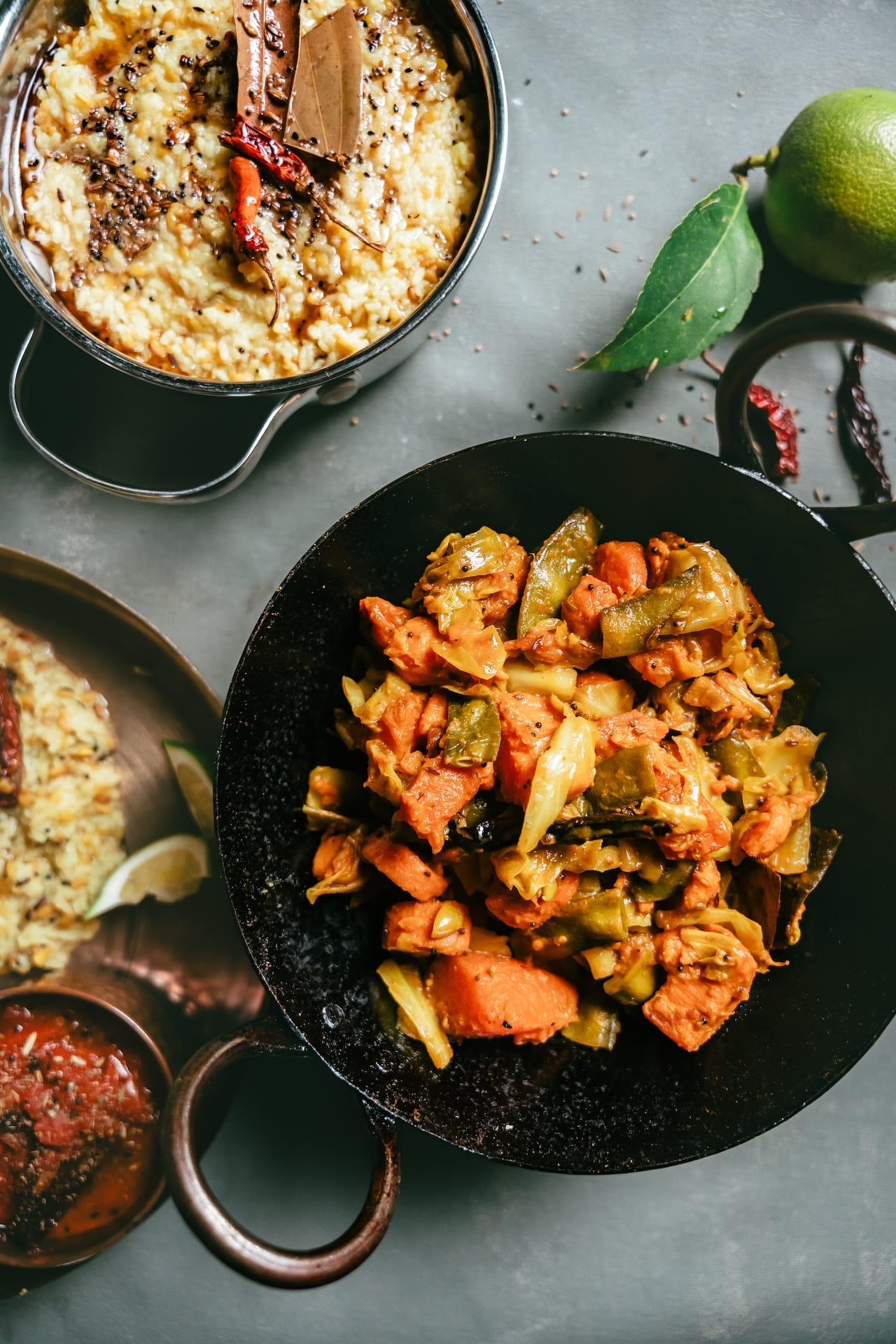
What is Labra
This Bengali Labra recipe is mildly spiced, naturally vegetarian, and full of the earthy aroma of panch phoron and mustard oil. Pumpkin brings sweetness, eggplant melts into the vegetables, sweet potato adds body, cabbage adds texture, and flat green beans bring a little freshness.
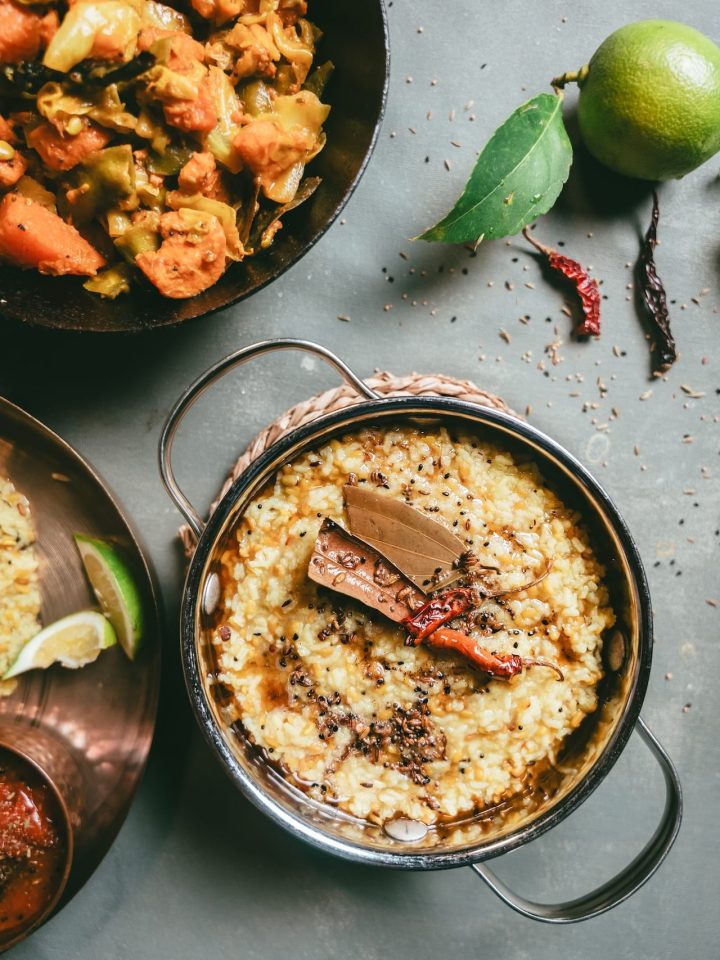
Labra is especially loved as part of a Bengali festive meal and is commonly served with khichuri, particularly as part of bhog during Durga Puja. But you don't need to wait for a festival to make it. It is just as comforting with steamed rice on an ordinary weeknight.
The beauty of Labra is that there isn't one rigid list of vegetables you have to follow. Bengali families often make it differently depending on the season, what vegetables are available, and the occasion. This version is the one I grew up enjoying, with a combination of pumpkin, eggplant, cabbage, sweet potato, and flat green beans.
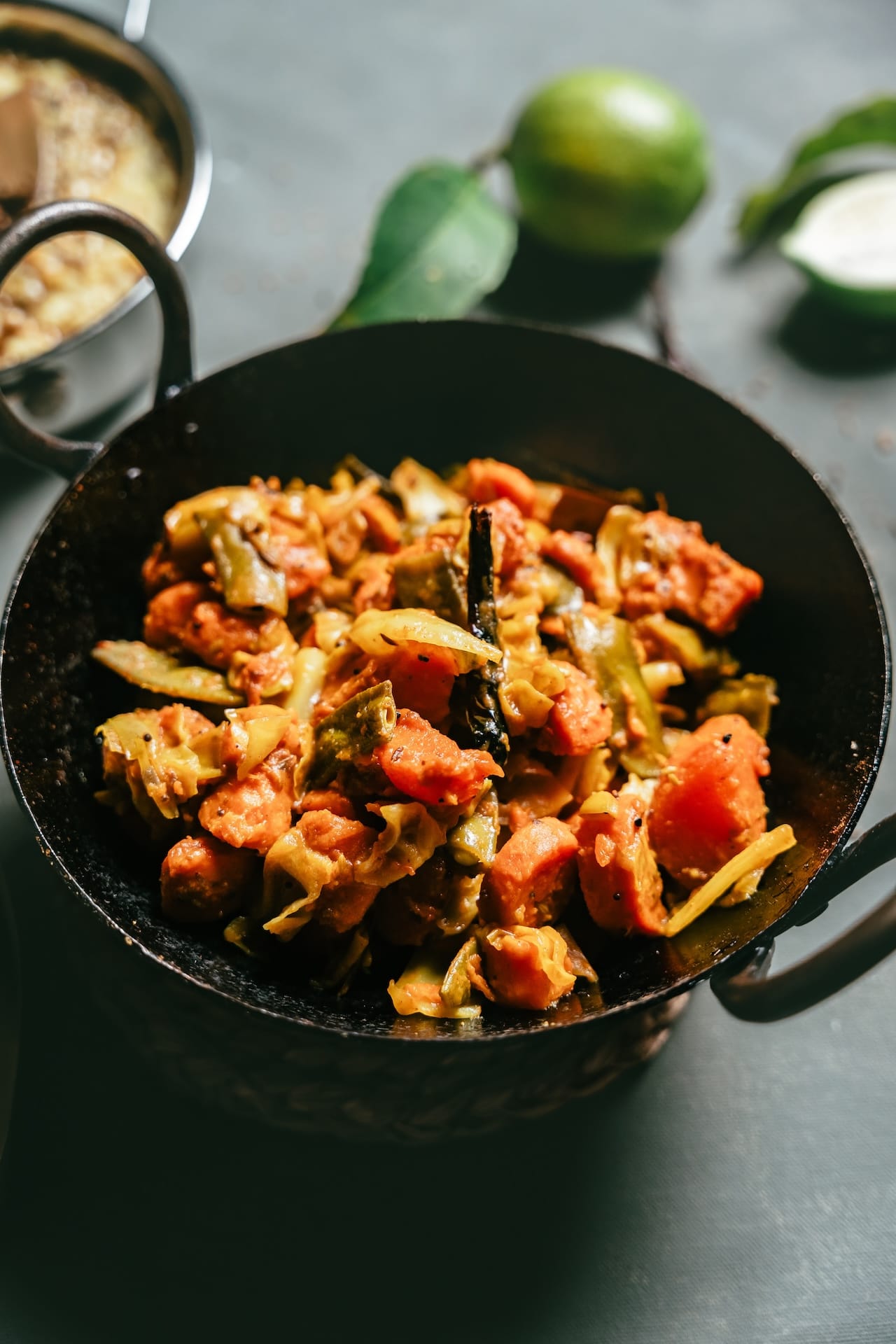
Why is Labra served during Durga Puja?
For many Bengalis, food is an important part of the Durga Puja experience. Bhog, the food offered during worship and later shared among devotees, commonly includes khichuri along with vegetable preparations, chutney, fried vegetables, and sweets.
Labra is one of the classic vegetable accompaniments associated with Bengali bhog. The original version of this recipe was inspired by that festive food tradition and by the kind of Labra made at home.
But Labra isn't exclusively a Durga Puja dish. It can also be prepared for other festive occasions and as a simple vegetarian side dish at home.
That is one of the things I love about it: a dish connected to celebration can also be everyday comfort food.
What does Bengali Labra taste like?
If you've never tasted Labra before, don't expect a spicy vegetable curry.
Labra is mild, aromatic, slightly sweet, earthy, and savory.
The pumpkin and sweet potato give the dish a gentle sweetness. Eggplant becomes soft and creamy as it cooks. Cabbage adds another layer of sweetness and texture, while the beans keep the vegetable mixture from becoming completely soft.
Then there is panch phoron.
When the five spices hit hot mustard oil, they crackle and release an unmistakable Bengali aroma. That tempering is one of the defining characteristics of the dish.
The final roasted spice powder adds another layer of fragrance without making the dish spicy.
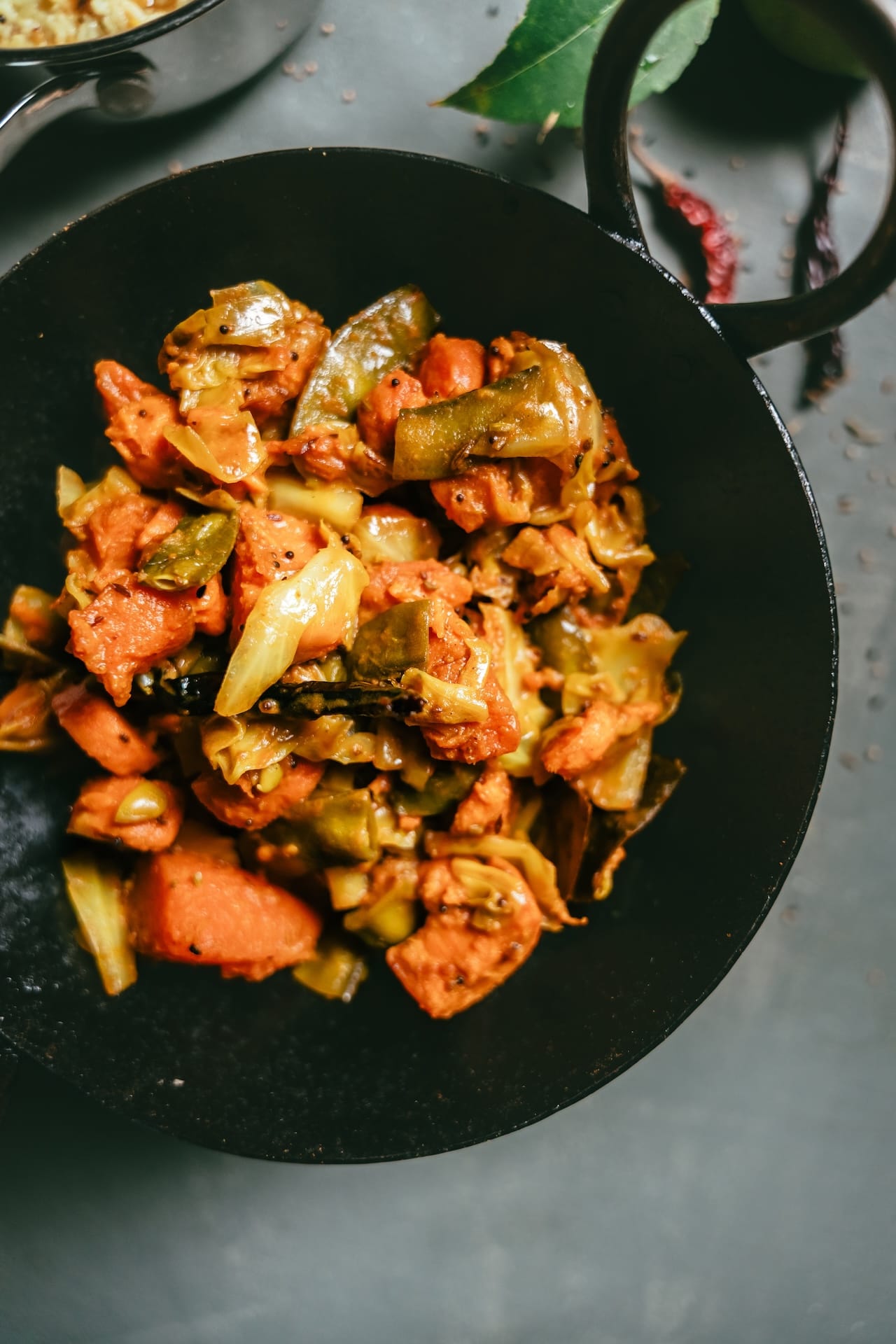
Ingredients for Bengali Labra
You don't need an enormous spice cabinet to make Labra. In fact, keeping the seasoning simple is part of what makes this dish special.
Vegetables
Pumpkin: Pumpkin is one of the most important vegetables in this version of Labra. It becomes soft as it cooks and releases natural sweetness and moisture into the dish.
Eggplant: Eggplant adds creaminess. As it cooks, it softens and partially melts into the other vegetables.
Cabbage: Cabbage brings a subtle sweetness and a little texture.
Sweet potato: Sweet potato adds starch and natural sweetness. It also helps give the finished Labra some body.
Flat green beans: Green beans add color and texture. You can use regular green beans if flat beans aren't available.
Mustard oil
Mustard oil is a key flavor in this Bengali-style Labra. It has a distinctive pungent aroma that works beautifully with panch phoron.
If you aren't accustomed to cooking with mustard oil, heat it properly before adding the spices. The sharp raw aroma mellows as the oil heats.
If mustard oil isn't available, another neutral cooking oil will work, but the finished dish won't have quite the same Bengali character.
Panch phoron
Panch phoron, also called Bengali five-spice, is a blend of whole spices commonly used for tempering in Bengali cooking.
A typical blend contains:
- Fenugreek seeds
- Cumin seeds
- Nigella seeds
- Black mustard seeds
- Fennel seeds
Equal portions are commonly used when making the blend at home.
The seeds are added directly to hot oil, where they sizzle and release their aroma.
Roasted spice powder
For this version, I like to make a simple bhaja moshla using cumin seeds, coriander seeds, and fennel seeds.
The seeds are briefly dry roasted and then ground. Adding this at the end gives the Labra a beautiful toasted aroma.
It is a small extra step, but one that makes a noticeable difference.
The remaining seasonings
You will also need:
- Dried red chilies
- Turmeric
- Salt
- A little sugar
The sugar isn't meant to make Labra taste sweet. It simply balances the natural bitterness and pungency of some of the vegetables and spices.
How to make Bengali Labra
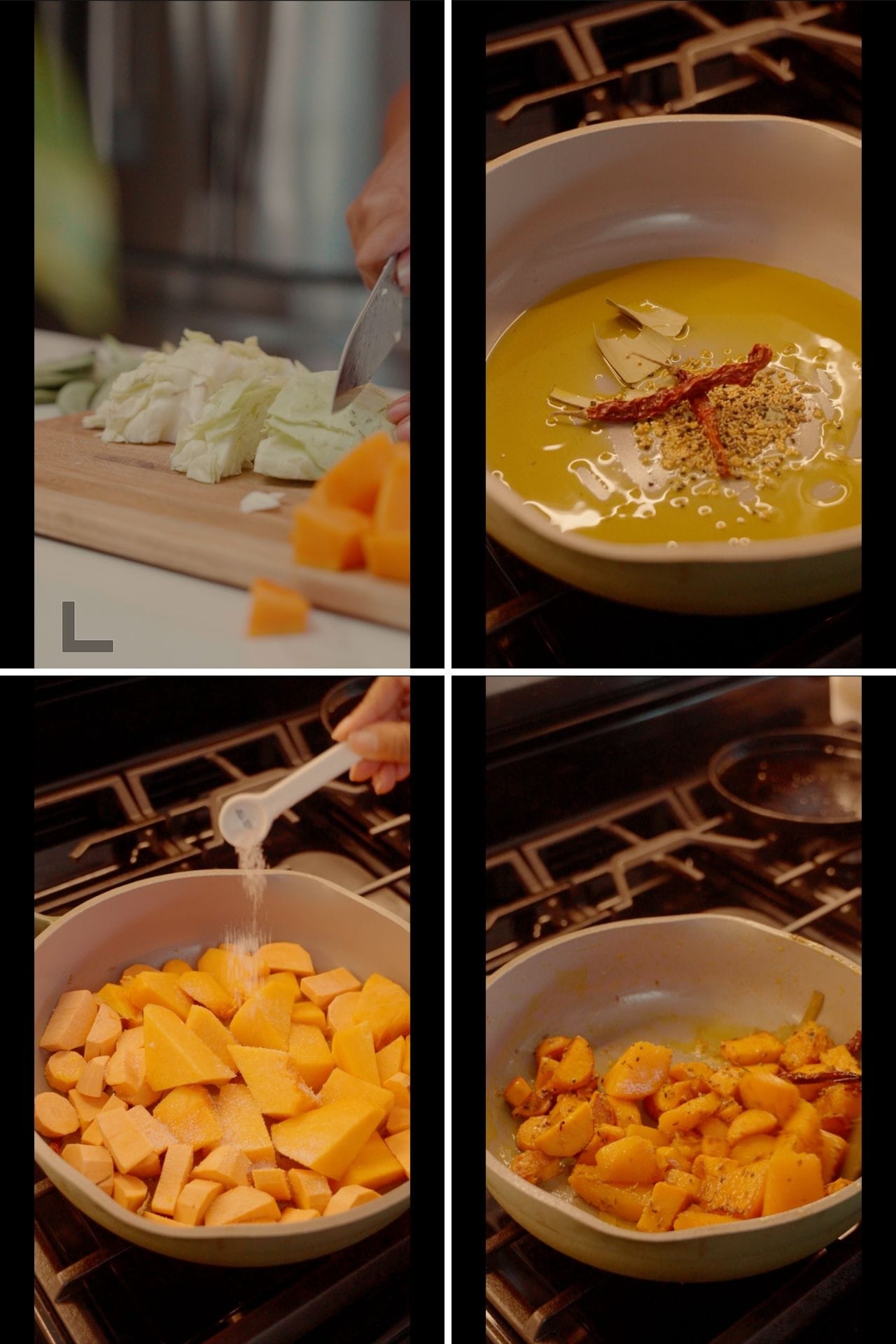
1. Prepare the vegetables
Peel the pumpkin and sweet potato.
Trim the flat beans and cut them into bite-size pieces.
Cut the pumpkin, eggplant, cabbage, and sweet potato into pieces that are slightly larger than you might normally cut vegetables for a curry.
Try to keep the pieces relatively similar in size.
Don't cut everything too small. Labra is supposed to have some texture, even though certain vegetables will soften and break down.
2. Make the roasted spice powder
Place the cumin seeds, coriander seeds, and fennel seeds in a dry skillet.
Toast them over medium heat for a few seconds, just until fragrant.
Be careful not to burn them.
Transfer the toasted spices to a mortar and pestle or spice grinder and grind them into a coarse or fine powder.
Set aside.
This roasted spice mixture will be added near the end of cooking.
3. Temper the mustard oil with panch phoron
Place a heavy-bottomed pan or kadai over medium heat.
Add the mustard oil and allow it to heat.
Add the panch phoron and dried red chilies.
The seeds should begin to sizzle and pop.
This is the moment when the mustard oil and panch phoron create the characteristic aroma of Bengali cooking.
Don't let the spices burn. Fenugreek seeds, in particular, can become bitter if they are allowed to darken too much.
4. Add the vegetables that need more time
Add the pumpkin and sweet potato first. Season with turmeric, salt, and a little sugar.
Give everything a gentle stir, then cover the pan. Cook for about 10 minutes, stirring once midway through.
The idea is to give the denser vegetables a head start.
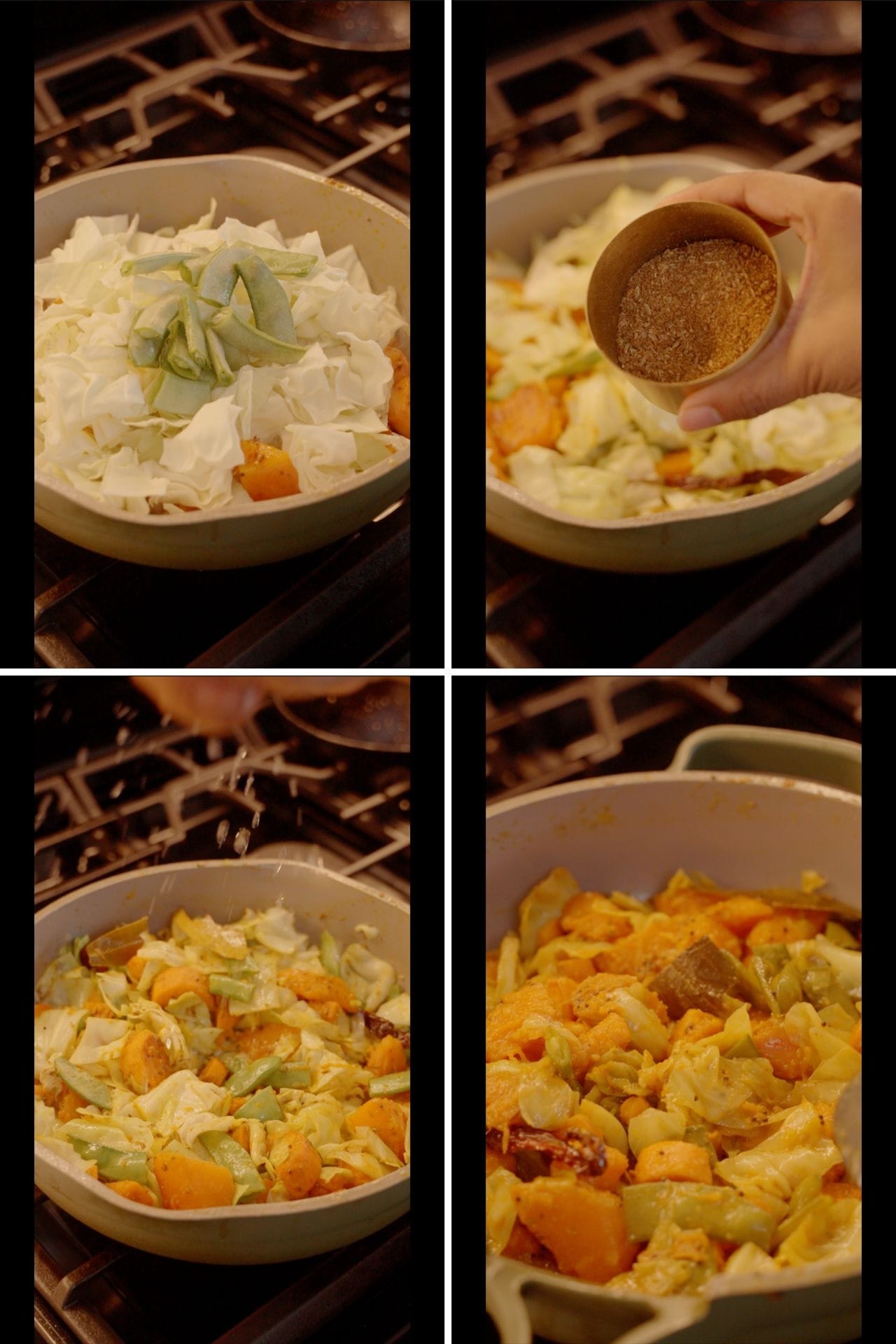
5. Add the remaining vegetables
After about 10 minutes, add the eggplant, cabbage, and flat green beans. Mix gently.
Cover again and cook for another few minutes. As the vegetables cook, they will release moisture. That moisture becomes the cooking liquid for the Labra.
You generally don't need to add a lot of water.
6. Add the bhaja moshla
Once the vegetables are cooked, sprinkle the roasted cumin, coriander, and fennel powder over the Labra.
Gently toss everything together.
Cook for another couple of minutes so the toasted spice can perfume the vegetables. Taste and adjust the salt if necessary.
That's it.
Your Bengali Labra is ready.
The secret to good Labra
The most important thing to understand about Labra is that it isn't about cooking every vegetable separately to exactly the same texture.
The vegetables have different jobs.
Pumpkin provides sweetness and moisture.
Eggplant creates creaminess.
Sweet potato adds starch and body.
Cabbage contributes volume and sweetness.
Beans provide texture.
As they cook together, their flavors mingle.
That's what gives Labra its characteristic "mixed" quality.
Don't add too much water
This is probably the easiest way to accidentally turn Labra into an ordinary mixed vegetable curry.
Start with little or no added water.
The vegetables release moisture as they cook, especially pumpkin and cabbage.
If your pan looks completely dry before the vegetables soften, add a small splash of water rather than a large amount.
Don't over-stir
Once the pumpkin and eggplant become soft, aggressive stirring can turn everything into mush.
Fold the vegetables gently instead. A little breakdown is desirable. Complete vegetable puree is not.
What vegetables can you use in Labra?
This is where Labra becomes wonderfully flexible.
There are many versions of Bengali Labra, and vegetable combinations vary between households and recipes. Some versions include potato, radish, raw banana, cauliflower, drumstick, ridge gourd, or other seasonal vegetables. K Khaana+2
You can think of the vegetables in three groups.
Soft and naturally sweet vegetables
- Pumpkin
- Sweet potato
- Cabbage
Creamy vegetables
- Eggplant
- Ridge gourd
Firm vegetables
- Potato
- Radish
- Raw banana
- Green beans
- Cauliflower
A good Labra usually benefits from having a mixture of textures rather than using five vegetables that all cook at exactly the same speed.
What to serve with Labra
My favorite way to serve Labra is with Bengali khichuri.
The soft, mildly spiced vegetables pair beautifully with warm rice and lentils.
For a Bengali-style festive meal, you can serve Labra with:
Labra is also delicious with simple steamed white rice.
If you're making an everyday vegetarian Bengali meal, serve it alongside dal and rice.
The original Labra recipe was specifically developed as part of a Bengali Durga Puja bhog meal, where khichuri and Labra are natural companions.
Labra vs. mixed vegetable curry: what's the difference?
Labra may look similar to a generic mixed vegetable curry, but the cooking style and seasoning are different.
A typical mixed vegetable curry can have a more pronounced gravy and may use several ground spices.
Labra is much more about the vegetables themselves.
Frequently Asked Questions
Labra refers to the Bengali mixed vegetable preparation in which different vegetables are cooked together until their flavors and textures come together.
Panch phoron is a Bengali five-spice blend typically made with fenugreek, cumin, nigella, black mustard, and fennel seeds. The whole spices are usually tempered in hot oil at the beginning of cooking.
There is no single mandatory vegetable list. Pumpkin, eggplant, potato or sweet potato, cabbage, beans, radish, raw banana, cauliflower, and other seasonal vegetables can be used depending on the recipe and household.
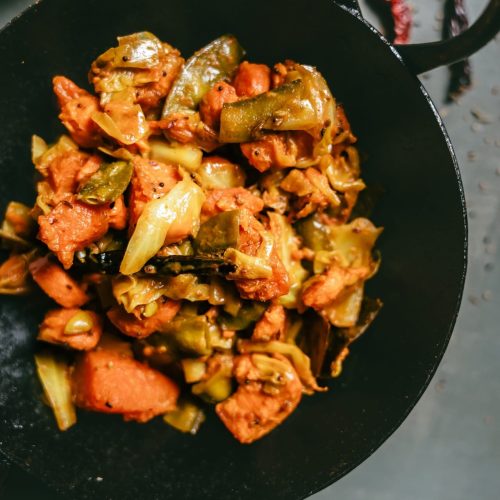
Bengali Labra Recipe – Bengali Mixed Vegetable Curry

Ingredients
- 11.45 oz Pumpkin (324 g)
- 8.75 oz Eggplant (248 g)
- 11.7 oz Cabbage (330 g)
- 4.85 oz Sweet Potato
- 5.45 oz Flat green beans (154 g)
- 3 tablespoons mustard oil
- 1 tablespoon Paanch Phoron
- 2 dry red chili
- ½ teaspoon sugar
- ½ teaspoon turmeric
Bhaja Moshla
- 1 tablespoon cumin seeds
- 1 tablespoon coriander seeds
- 1 tablespoon fennel seeds
- 1 teaspoon salt
Instructions
- In a medium hot pan, dry roast the cumin seeds, coriander seeds and fennel seeds for a few seconds. Grind it using a mortar pestle or a spice grinder. Keep it aside to be used later.
- Peel the pumpkin and sweet potato. Trim the edges of the beans. Cut all the vegetables into little bigger than bite size chunks.
- Paanch Phoron is available in most Indian stores but if you have to make it at home, just mix equal portion of fenugreek seeds, cumin seeds, nigella seeds, black mustard seeds and fennel seeds.
- Place a big heavy bottom pan on medium heat and pour the oil. Once the oil heats up, drop the paanch phoron and dry red chili. Let it sizzle for a few seconds.
- Drop the pumpkin and sweet potato chunks (the idea is to cook the vegetables in intervals, starting with the ones that will take more amount of time to soften). Add the salt, sugar and turmeric. Stir around, cover the pan and cook for 10 minutes, stirring once in between.
- Once those vegetables are softened, add rest of the vegetables and stir around. Cover the pan and cook for 5 to 10 minutes. Be careful to not turn the vegetables mushy.
- By now, the vegetables should have released juices and softened. Sprinkle the spice powder that was kept aside. Toss around to mix everything and cook for 2 more minutes.
- Check for salt and add any, if needed.
Anindya Sundar Basu
These are the true hidden gems of Bengali cuisine which needs to be highlighted and shared across. I am glad and proud too that you have shared this recipe.
Aparna somani.
Made it. Loved it. It’s now in my repertoire of veggies which I love.
David @ Spiced
It's funny how food can totally help us travel many miles away...even if we can't actually make the trip. These veggies look delicious, and I would be quite happy if these showed up for dinner! 🙂
Shilpa Sharma
Beautifully explained and what a lovely dish this is.
angiesrecipes
Looks mouthwatering with all the great spices!