

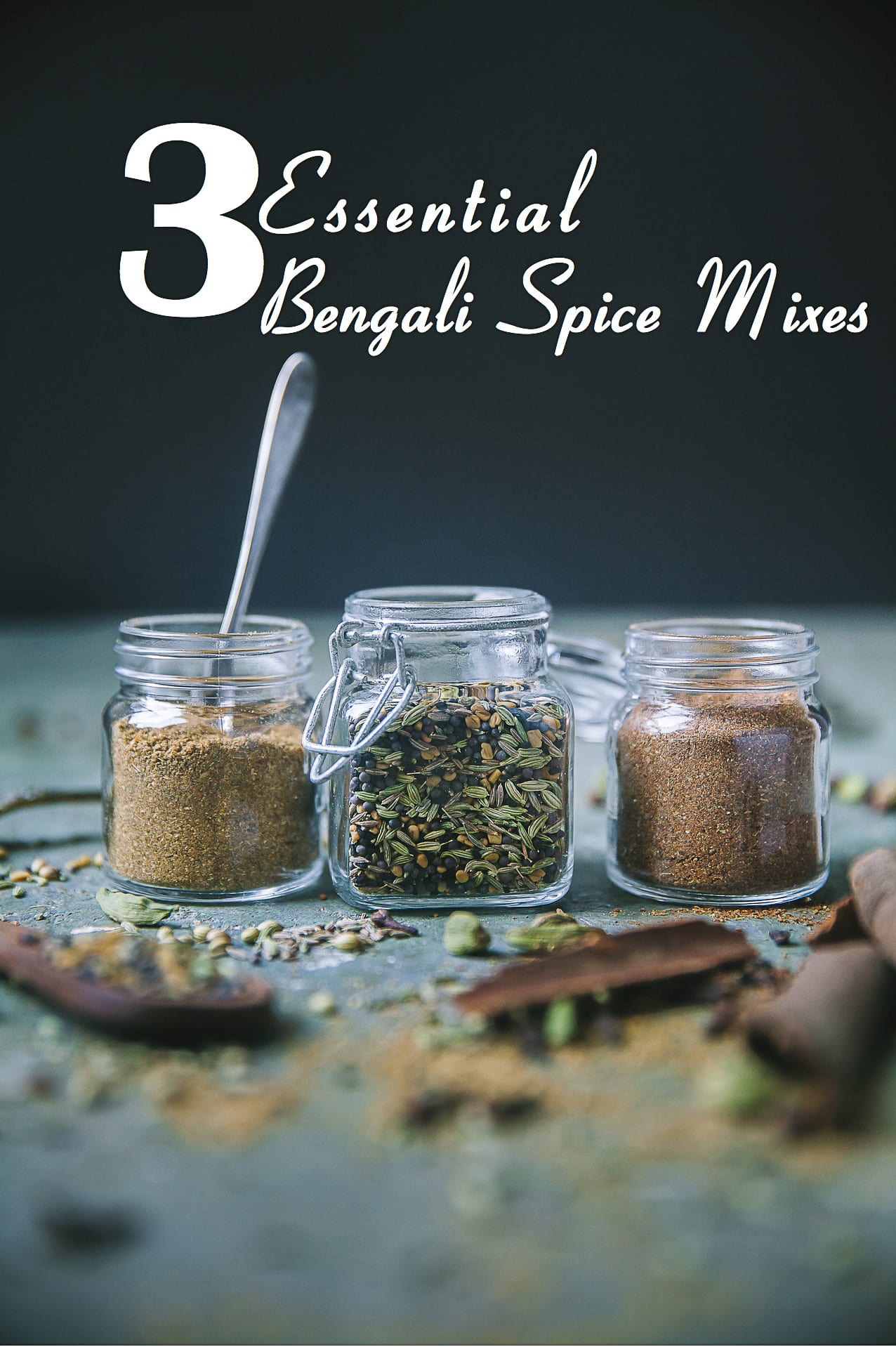
I have been making my everyday spice mixes for the past few years. Spices are the soul to Indian cooking and the aroma of freshly made spice mix can never be matched by the store bought version. It might add a few extra minutes but I always feel it’s worth tasking that time. Today, I am sharing 3 essential Bengali spice mixes, which very much defines the Bengali cuisine. These simple spice mixes are used in everyday cooking, vegetarian or non-vegetarian, and often prepared fresh at home.
You may wonder if you should make these spices if you don't cook Bengali food. Well, I say you should try, because all these three spices are earthy, aromatic and works amazing on curries. I have mentioned below how you can use each of these spices in Bengali cooking and non-bengali cooking.
Bengali Spice Mixes - Paanch Phoron (Indian Five Spice)
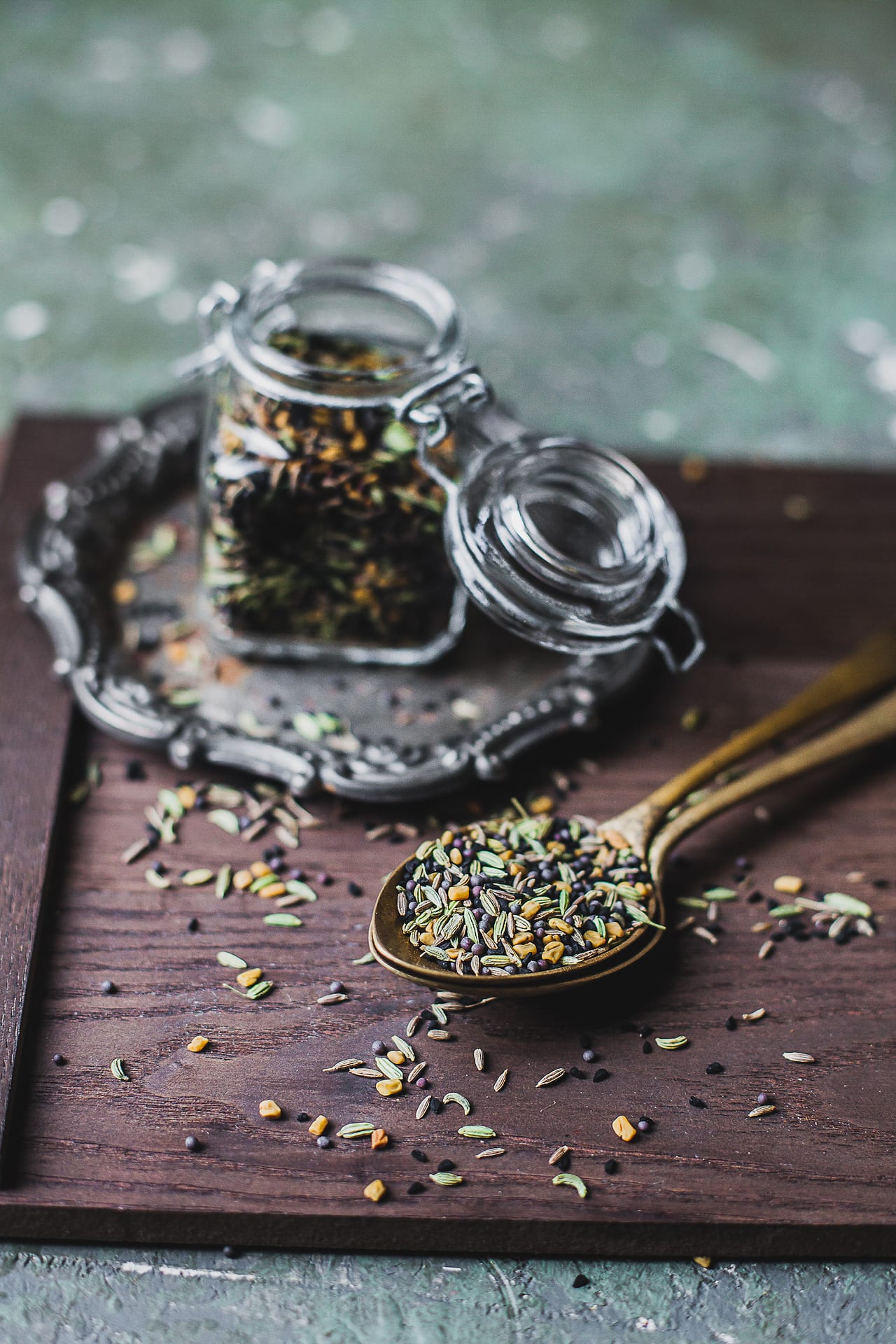
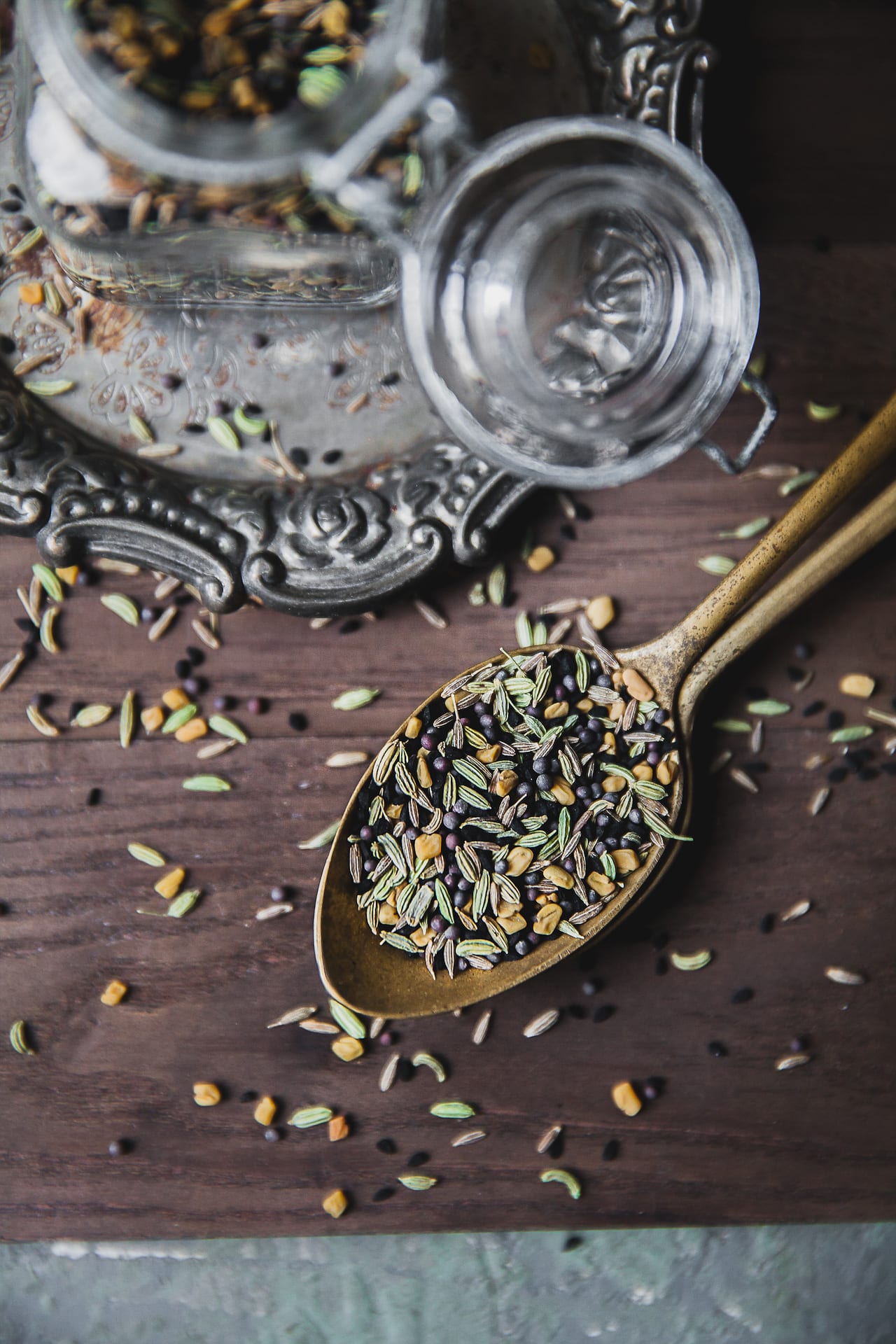
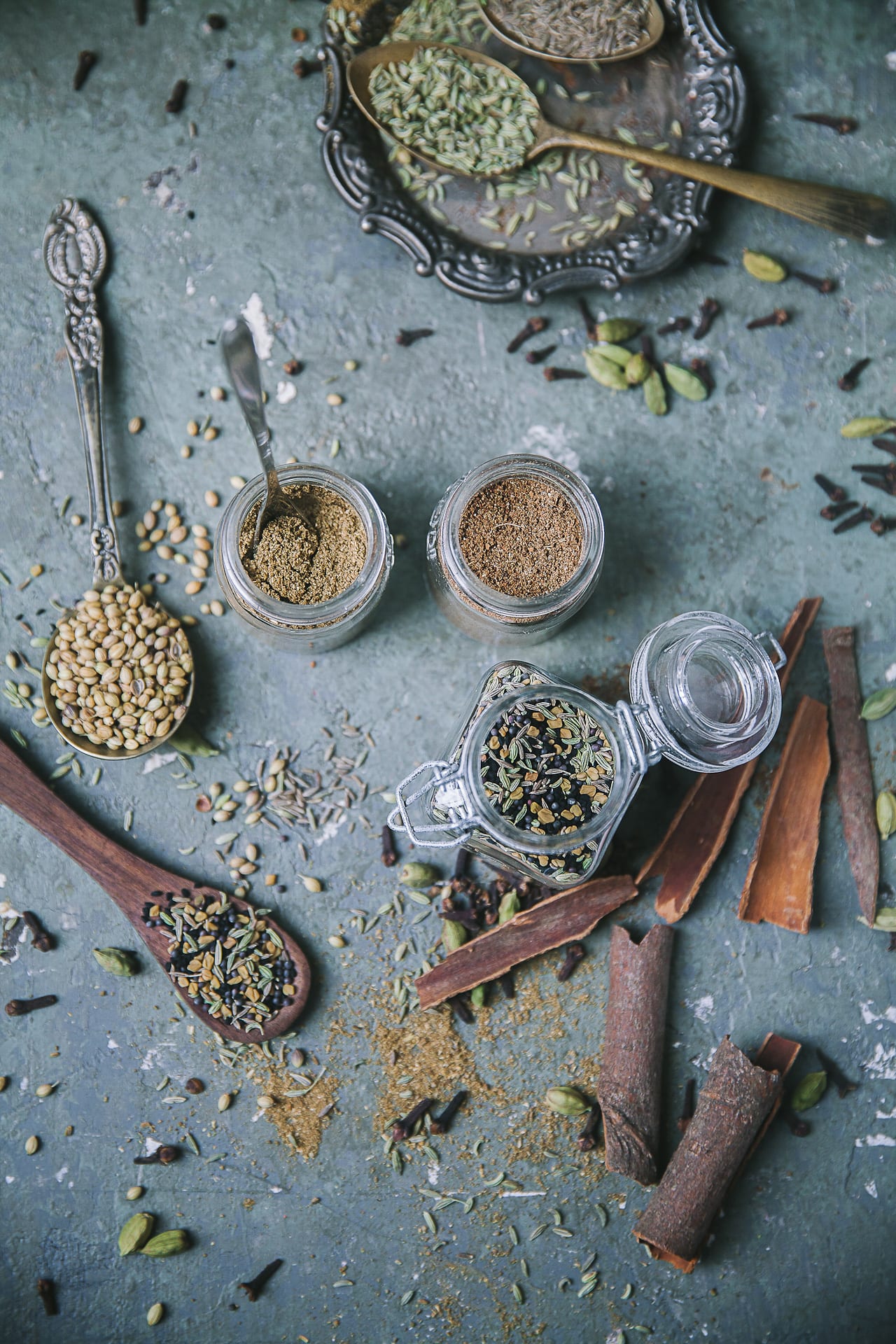
Paanch Phoron (Indian Five Spice) is the most popular Bengali spice mix. As the name describes, it consists of 5 whole spices - cumin seeds, fennel seeds, mustard seeds, fenugreek seeds and nigella seeds. You use it in the beginning of the cooking to infuse the hot oil and it releases a bittersweet aroma. Sometimes, this is the only spice mix you use in a dish. Apart from the usual Bengali dishes, you can use it as a rub on meat or vegetable for roasting. Also works amazing for pickling vegetables.
Bengali Spice Mixes - Bhaaja Moshla
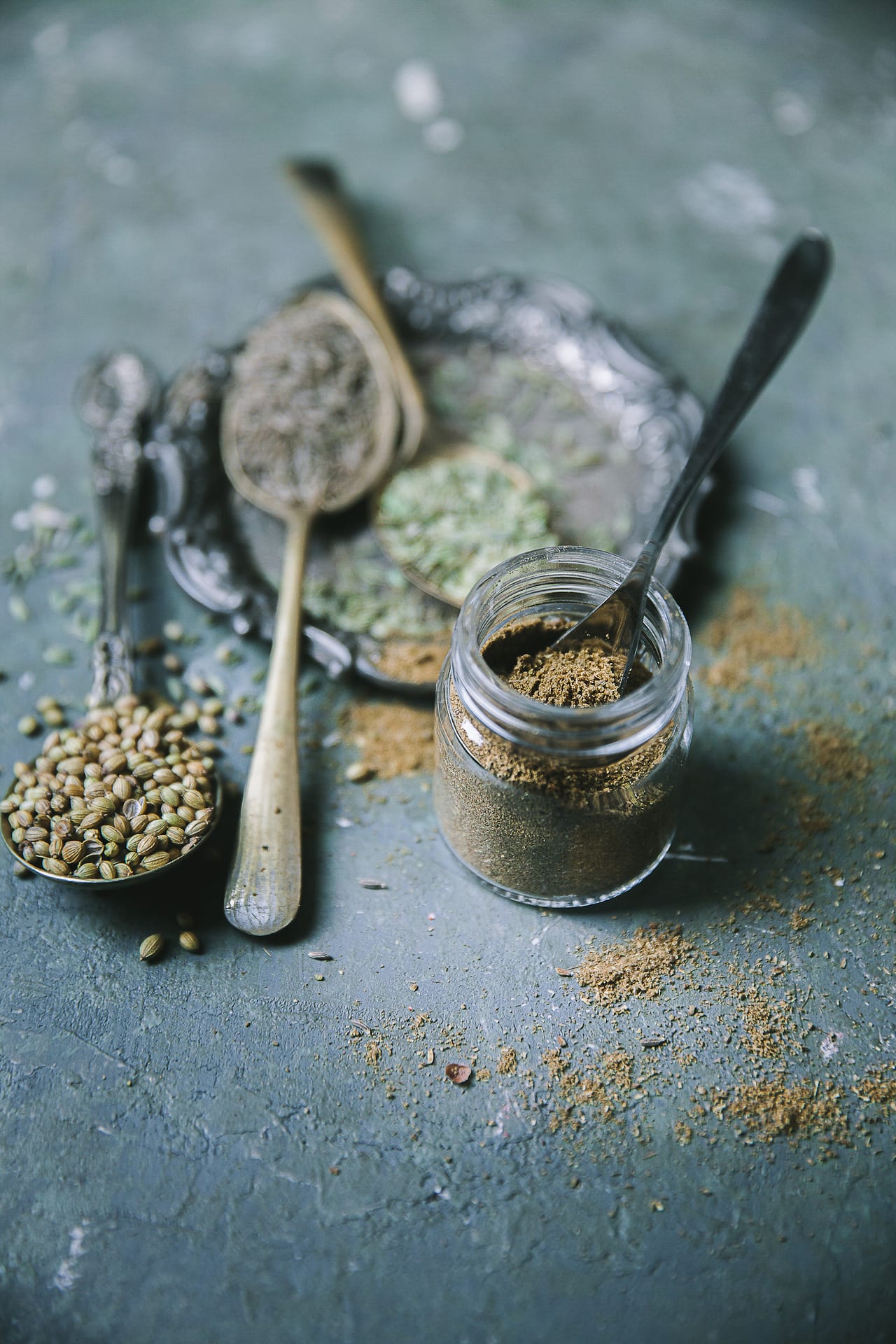
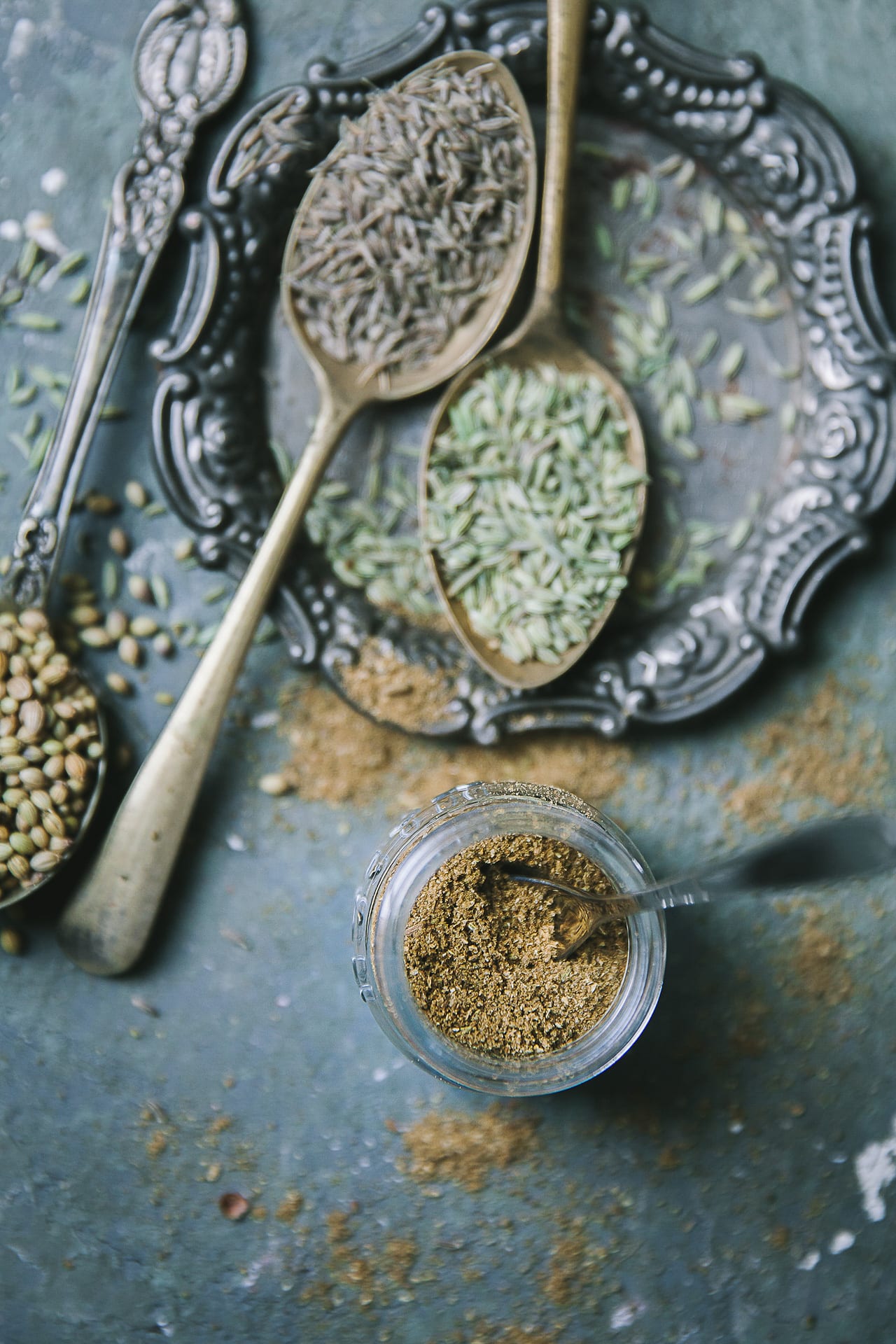
Bhaaja Moshla, literally translating to roasted spice, is a very unique aromatic spice mix. It is prepared with just three whole spices. It is typically used in vegetarian plant based recipes. You can also just sprinkle the spice mix on chaat or chutney to enhance the seasoning. The strong, robust and smoky flavor of bhaja moshla can uplift the flavor of any dish.
Bengali Gorom Moshla
Unlike the traditional Indian Garam Masala, Bengali Gorom Moshla includes just three whole spices. It’s not very spicy or hot, instead quite perfumy and smooth to the palate. You use it in any rich curry, vegetarian or non-vegetarian, and always added at the end of the cooking to retain the fresh flavor. As you can notice the color of the Bengali Gorom Moshla is not red because there is no dry red chili added, but if you prefer you can add that for extra heat.
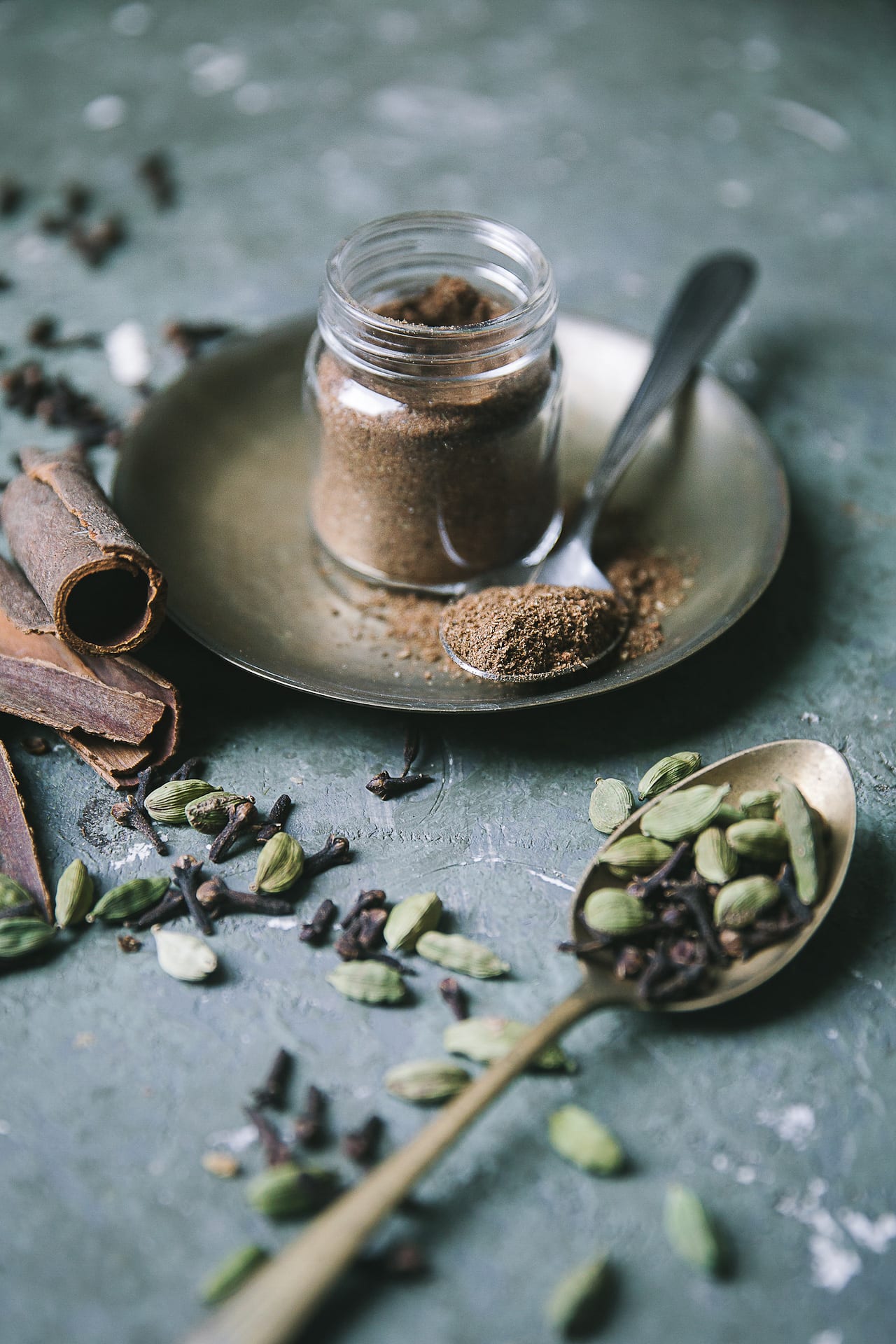
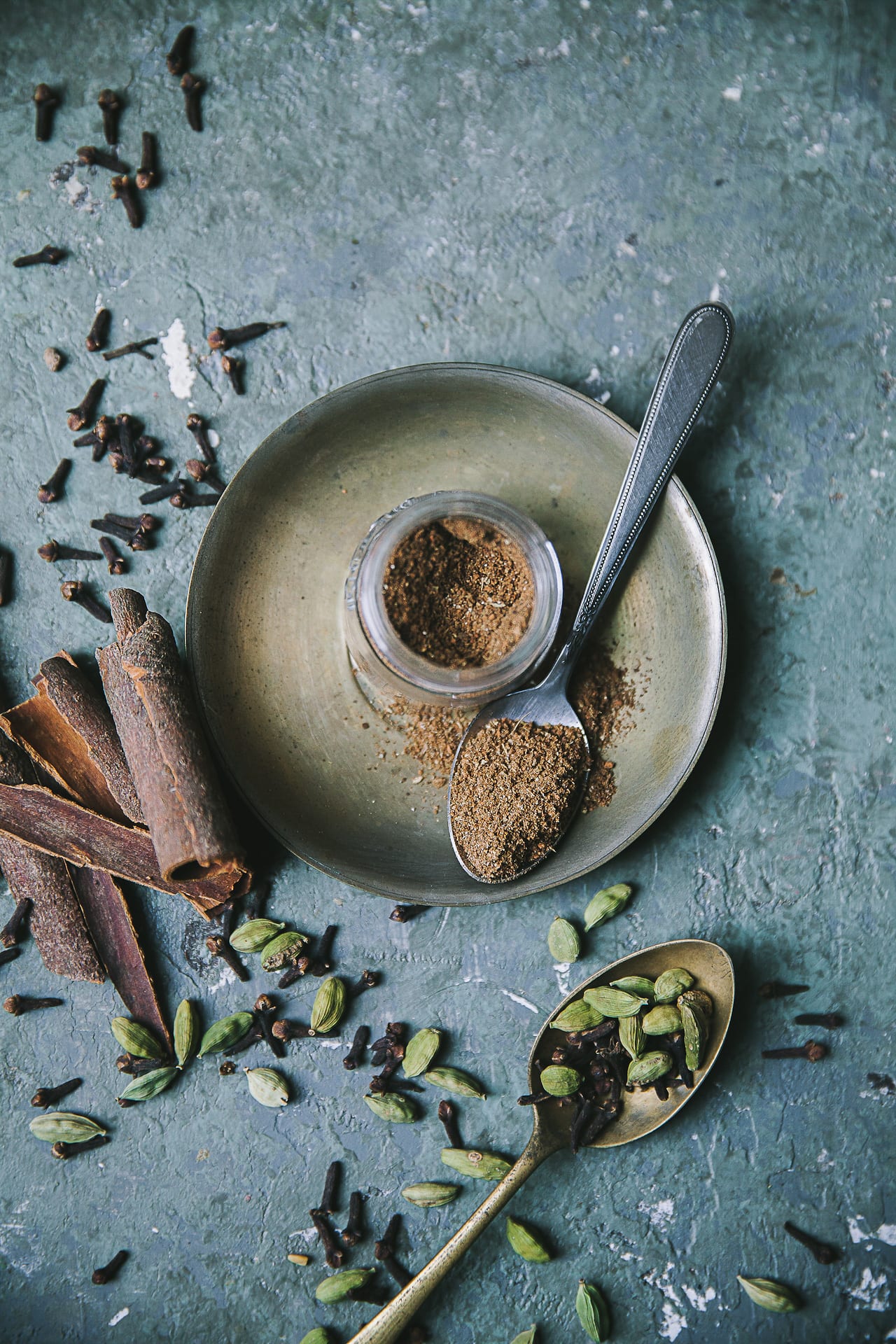
The ground spice mixes Bhaaja Moshla and Bengali Gorom Moshla are prepared fresh in every Bengali household. It can however have mild variations based on personal preferences. The recipes I shared here are my Mom’s recipes. I always make them in small batches because with time, the flavor of the spice does go down a notch. Always store in clean air tight jar, preferably glass jars. Now if you want to learn more on Bengali food, do grab a copy of my book - Taste of Eastern India, where I have used these spices in various dishes!
3 Essential Bengali Spice Mixes

Ingredients
- For Paanch Phoron
- 1 tablespoon fennel seeds
- 1 tablespoon nigella seeds
- 1 tablespoon cumin seeds
- 1 tablespoon mustard seeds
- 1 tablespoon fenugreek seeds
for Bhaaja Moshla
- 1 tablespoon cumin seeds
- 1 tablespoon fennel seeds
- 1 tablespoon coriander seeds
for Bengali Gorom Moshla
- 20 green cardamoms
- 1 teaspoon cloves
- 2 cinnamon barks
Instructions
- For Paanch Phoron - Put all the spices in a clean airtight jar and mix it up.
- For Bhaaja Moshla - Dry roast all the spices at medium heat for about a minute by stirring constantly until the color of the spice changes to a mild darker shade.Let the roasted spice cool down a bit and then, grind it to powder. Store it in an airtight jar.
- For Bengali Gorom Moshla- Dry roast all the spices at medium heat by stirring constantly for about a minute until you can smell the aroma of the spices. Let the roasted spice cool down a bit and then, grind it to powder. Store it in an airtight jar
Nutrition
I love to see your creation from my blog, so if you make this spice mixes, tag me on social media @playfulcooking.
Learn about the vibrant cuisine of Kolkata - Check out my book Taste of Eastern India and follow the #tasteofeasternindia
Athena
I always learn something when I come to your blog. Beautiful shots and styling of the spices!
mjskit
I knew what 3 of these spices were so thanks so much for the beautiful pictures and explanation of texture, taste and aroma! The spice mix sounds extremely aromatic and your pictures are lovely!
Carie Means
According to Wiki Radhuni is wild celery, would agree with this? Just trying to track down the ingredients. 🙂 Beautiful pictures - BTW.
"Radhuni, as it's known in Bengali (Bengali: রাধুনি), is often confused with celery and is known as wild celery in English. It is known as ajmod in Hindi (Hindi: अजमोद) and Urdu (Urdu: اجمود), both derived from Sanskrit ajamoda (Sanskrit: अजमोद) or ajamodika (Sanskrit: अजमोदिका), from which the name for ajwain is also derived. It is also known as kant-balu in Burmese, and phak chi lom in Thai (Thai: ผักชีล้อม), although this name may also refer to a variety of celery."
Season with Spice
Beautiful images of each spice, Kankana. Excited to try this blend out in a veggie stir-fry. Thanks for sharing it!
jehanne@thecookingdoctor
I am head over heels with your gorgeous spices and now I must find radhuni as I never ever seen or had them before! Pls share some photography tips-your pics are breathtaking:-)
Ira Rodrigues
I love this post Kankana! hmm now I know what is panch phoron, thank you- thank you...
rebecca
sounds great and first class pics
Angie@Angie's Recipes
Beautiful photos of those spices...Must look for some nigella seeds.
Vertika
Radhuni is a close relative of ajwain called ajmod or ajmodika....
Sanjeeta kk
What a lovely post, Kankana..isn't Radhoni..ajwain seeds? Looks like that.
Kankana Saxena
Hi Sanjeeta, It looks a lot like ajwain seeds but it's different taste wise.
Veena
Amazing pictures! I've seen a wikipedia page and comments from Bengali cooks on forums say that Radhuni is wild celery in English. For a more authentic flavor, celery seeds would be a better substitute than black mustard seeds...
Kitchen Belleicious
ohh! I just learned so much! Wonderful post and the pictures are amazing!
easyfoodsmith
Lovely post Kankana. Beautiful clicks have added to the glory of this wonderful spice mix.
Jennifer (Delicieux)
What a wonderful post, I loved your explanation of all of the spices, some of which I was not familiar with, and well your photos of the spices are just so beautiful.
Pranjali
Very beautiful post Kankana.
http://www.foodydelight.com/
foodwanderings
Nice pictorial tutorial into the Bengalo kitchen Kankana. Love your photos and those spoons with the Nigella seeds, I just received curry mixes (masalas) from Israel, Maharashtran style, but I suspect my sister sent them to me from a different spice shop. Mix is different!
Tobias @ T and Tea Cake
Beautiful photography!
And this post is very informative! I am currently doing a bit of research on spice mixes of all kinds to literally 'spice things up' in my cooking so this is very much to my liking.
Cheers,
Tobias
Liz
This is a new spice combination to me....but I'd love to find it and give it a try. Your photos are lovely!
Ameena
We aren't Bengali but my Lucknow born father would totally agree with you on this. Actually, it's one of the few spices I actually use - my mom gave me a recipe to use panch phoron in and it is fantastic! Even when I make it!
Gorgeous photos!
Hope you are having a great Sunday so far.
Daisy@Nevertoosweet
Very informative posts 🙂 Thanks for sharing so much information. I don't have Indian food much so I never knew there were so many spices ~ And hehe Nigella Seeds i had a bit of a laugh at that 😀
Congrats for making Top 9 on Food buzz!